Yosuga no Sora figures

ヨスガノソラ In solitude, where we are least alone.
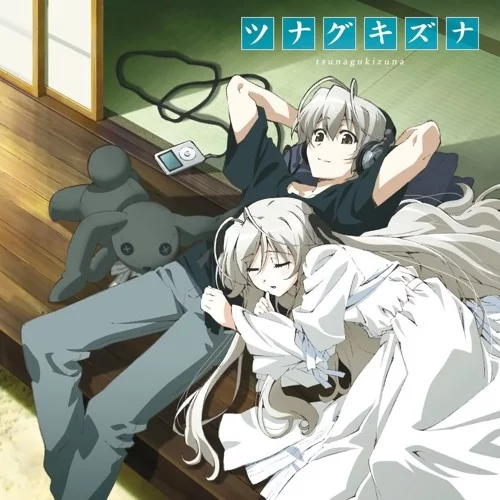
5.99 finished_airing 12 episodes tv 2010 - 2010
Studio: feel.
Drama Erotica Harem Romance

About Yosuga no Sora

Yosuga no Sora Anime Overview

Yosuga no Sora figures suit a series remembered for its quiet atmosphere, emotional intensity, and unusually intimate storytelling. The Yosuga no Sora anime takes a rural setting, a grieving family situation, and a group of emotionally complicated relationships, then builds a romance drama that feels reflective, fragile, and often deliberately uncomfortable. Rather than aiming for action or spectacle, the series focuses on memory, longing, isolation, and the ways personal history can shape desire.

The story follows Haruka Kasugano and his twin sister Sora, who move back to the countryside after the death of their parents. Returning to the home connected to their childhood means reconnecting with old places, old acquaintances, and unresolved emotions. What initially appears to be a slow rural reset gradually turns into a series of emotionally charged routes centered on different heroines, each one revealing a different side of Haruka, of the people around him, and of the emotional weight the twins are carrying.

That is what gives Yosuga no Sora anime its particular identity. It is calm on the surface, but emotionally volatile underneath. The series relies on stillness, tension, and personal vulnerability far more than plot-heavy escalation. Its drama comes from closeness, secrecy, and the consequences of feelings that become difficult to contain.

Yosuga no Sora Story and Characters

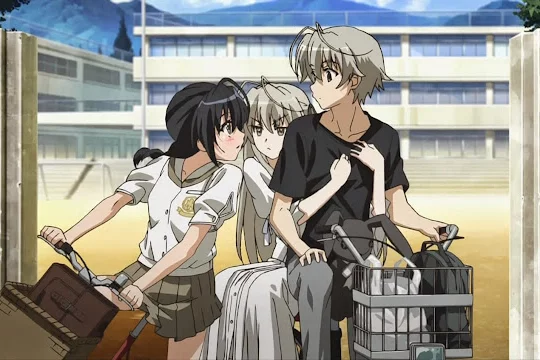
At the center of the story is Haruka, whose return to the countryside places him back inside a network of past relationships and unfinished emotional ties. He is quiet, responsible, and often defined by his instinct to care for others, especially Sora. That dependable side makes him easy for other characters to lean on, but it also places him in situations where emotional boundaries grow increasingly difficult to manage. Haruka is less a forceful protagonist than a reflective one, and much of the anime’s mood depends on that gentler presence.

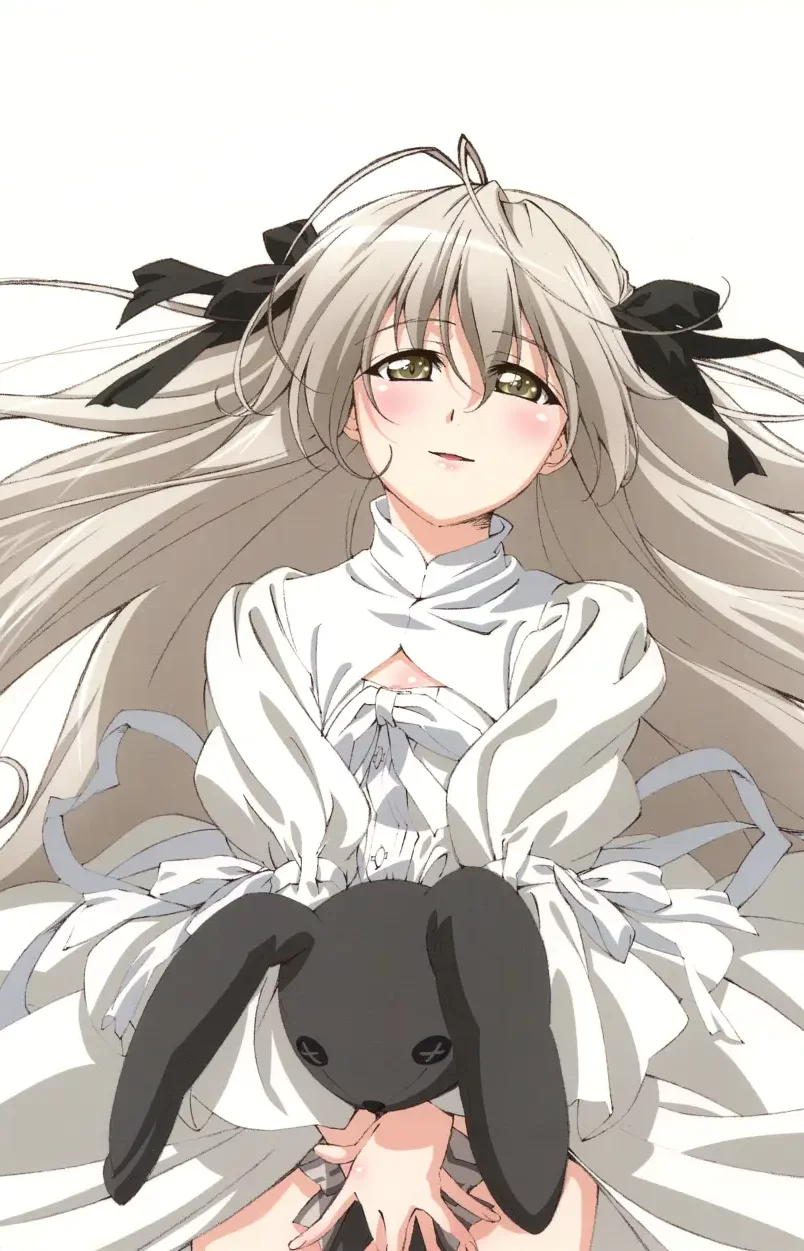
Among the most important Yosuga no Sora characters is Sora Kasugano. Frail, withdrawn, and deeply attached to Haruka, Sora is one of the defining emotional forces of the series. Her quiet demeanor hides intense vulnerability, possessiveness, loneliness, and dependence. She is not simply written as a mysterious twin sister figure. She is central to the atmosphere of the work itself. The series often feels like it is orbiting the emotional gravity she creates, even when other romantic routes take the foreground.

Nao Yorihime brings a different kind of tension. As a childhood friend living next door, she represents familiarity, regret, and emotional history. Nao’s connection to Haruka is marked by affection, guilt, and the lingering weight of the past. Her route highlights the way Yosuga no Sora treats romance not as something clean or idealized, but as something shaped by memory and personal damage.

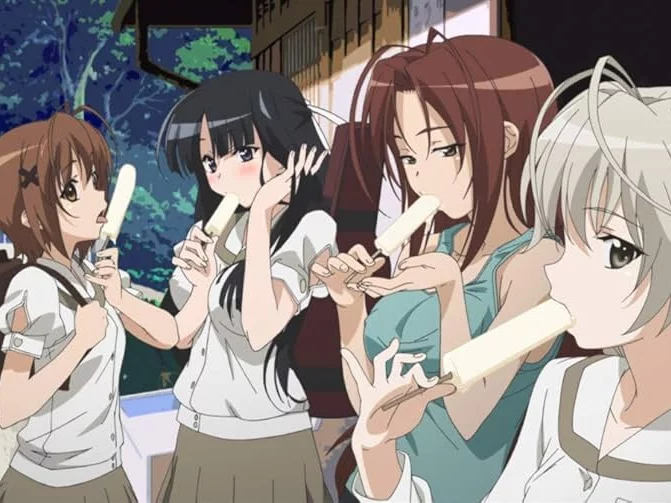
Kazuha Migiwa introduces a more refined and composed presence. She is intelligent, elegant, and socially poised, but carries burdens connected to family expectation and emotional restraint. Her role gives the series one of its more outwardly graceful routes, though the emotional complications beneath that elegance remain consistent with the tone of the work. Akira Amatsume, by contrast, brings a brighter and more openly energetic presence, yet her route also reveals loneliness and hidden pain beneath that warmth. One of the strengths of Yosuga no Sora is that its heroines are not just surface archetypes. Each route allows private tension to emerge from behind first impressions.

Yosuga no Sora Setting and Narrative Structure

The rural setting is one of the most important parts of Yosuga no Sora. The countryside is not just a backdrop. It shapes the pace, the emotional distance between people, and the feeling of being enclosed within memory. Empty roads, quiet homes, summer light, train lines, and familiar landmarks all contribute to the sensation that Haruka and Sora have stepped back into a place where the past never fully disappeared.

The anime’s structure also sets it apart. Rather than telling a single uninterrupted romance line, Yosuga no Sora uses an omnibus-style format that explores multiple heroine routes. That approach allows the same emotional landscape to be revisited through different relational possibilities. Instead of one fixed romantic conclusion, the series presents alternate routes that highlight different kinds of attachment, conflict, and longing. This structure gives the anime a visual novel sensibility while also reinforcing its central idea that emotional lives can branch in painful and revealing ways.

Because of that route-based format, the series feels both intimate and fragmented. Each storyline places a different emotional bond in focus, but the same sense of melancholy remains. The result is a work that can feel less like one straight romance narrative and more like several variations on solitude, desire, and unresolved grief.

Yosuga no Sora Themes and Style

The clearest theme in Yosuga no Sora is emotional dependency. Many of its characters are shaped by loneliness, by unspoken need, or by the fear of being left behind. Relationships in the series are rarely simple expressions of affection. They are tied to memory, guilt, obligation, and the need to be seen by someone who already knows the hidden parts of you. That gives the anime a tone that is often tender but rarely uncomplicated.

Another major theme is the tension between private feeling and social boundary. Yosuga no Sora repeatedly places characters in situations where desire clashes with expectation, where closeness becomes difficult to justify, and where emotional truth is inseparable from discomfort. That is one reason the anime became so widely discussed. It does not avoid taboo or difficult emotional territory. Instead, it places that tension directly at the center of its dramatic identity.

Stylistically, the series favors softness and restraint. It uses quiet scenes, pauses, gentle lighting, and a reflective atmosphere to intensify rather than reduce emotional weight. Yosuga no Sora does not need aggressive visual dramatics to create tension. It often becomes more unsettling precisely because it remains so calm while characters move toward difficult choices.

Yosuga no Sora Animation and Production

The anime adaptation works best when it leans into mood. Yosuga no Sora is not a story that depends on explosive events or constant movement. Its strength lies in atmosphere, stillness, and emotional hesitation. The production supports that through warm seasonal backgrounds, measured pacing, and a presentation that gives characters room to sit in silence or uncertainty. Those choices help the anime preserve the introspective quality associated with visual novel storytelling.

Character presentation is especially important here. Expressions, body language, and framing often carry more meaning than overt dialogue. A glance, a pause, or a slight shift in distance can matter enormously in a series so dependent on emotional tension. That gives the anime an intimacy that suits its subject matter very well.

The route-based structure also shapes the production rhythm. Because the anime revisits Haruka’s world through multiple romantic possibilities, the direction has to maintain consistency in setting while allowing each arc to develop its own emotional emphasis. That balance is one of the more distinctive elements of the adaptation and one of the reasons it remains memorable among romance anime from its period.

Yosuga no Sora Popularity and Impact

Yosuga no Sora became well known not because it behaved like a conventional romance anime, but because it refused to do so. Its quiet pacing, route-based storytelling, and willingness to explore emotionally and socially uncomfortable material gave it a reputation that remained strong long after its original airing. For some viewers, that made it divisive. For others, it made it unforgettable. Either way, it left a clear impression.

Part of the series’ lasting impact comes from its atmosphere. Many romance anime are remembered for comedy, confession scenes, or idealized chemistry. Yosuga no Sora is remembered for tension, melancholy, and emotional ambiguity. Its setting, music, and character dynamics combine into a mood that is hard to mistake for anything else. That distinctiveness helped it maintain a visible place in discussions about romance adaptations from visual novels.

The characters also contributed strongly to its staying power. Sora in particular became one of the most recognized faces associated with the title, but Haruka, Nao, Kazuha, and Akira also helped define its broader emotional range. The series remains notable because it pairs visual softness with difficult subject matter in a way that many viewers continue to find striking, whether they admire it, question it, or both.

Yosuga no Sora Figures and Merchandise

Yosuga no Sora figures have a distinctive appeal because the series is so strongly associated with mood, character presence, and soft visual design. Sora Kasugano is the most obvious candidate for anime figures thanks to her pale, recognizable look, quiet expression, and central role in the identity of the series. Haruka is less commonly imagined as a display centerpiece on his own, but paired sets or scene-based collectibles could reflect the emotional closeness that defines the story. Kazuha Migiwa and Akira Amatsume also offer strong potential for character-focused merchandise because of their contrasting visual styles and different emotional tones within the anime.

For collectors, this is a title with room for several figure approaches. Nendoroids could emphasize the softer and more recognizable sides of the cast, while scale figures would be better suited to the delicate mood, detailed outfits, and restrained elegance associated with the series. Pop Up Parade releases and prize figures could also work well for collectors who want accessible displays centered on key Yosuga no Sora characters. Beyond figures, acrylic stands, art prints, keychains, and other collectibles would fit naturally with a franchise remembered for its character visuals and atmosphere.

Because Yosuga no Sora is so defined by emotion and contrast, the best merchandise would likely highlight that balance of softness and intensity. A display with Sora, Haruka, Kazuha, and Akira would immediately reflect the quiet but emotionally loaded world that makes the series so memorable.

Browse the full Yosuga no Sora figure collection at Online Otaku, from Nendoroids to scale figures, sorted by character.
Yosuga no Sora Yosuga no Sora
FAQ

What is Yosuga no Sora about?

Yosuga no Sora is a drama romance anime that follows twins Haruka and Sora Kasugano after they move to a rural town following the death of their parents. The story explores multiple relationship paths as Haruka forms bonds with different characters, each route focusing on emotional intimacy, personal struggle, and the consequences of choice.

What is Yosuga no Sora known for?

The series is best known for its route-based storytelling adapted from a visual novel and for its controversial themes, including taboo relationships. Its emotional intensity and explicit content have made it one of the most discussed romance anime of its era.

Why is Yosuga no Sora rated R?

Yosuga no Sora is rated R due to explicit sexual content, mature themes, and depictions of taboo relationships. The anime includes scenes intended for adult audiences and is not suitable for minors.

Are Haruka and Sora siblings in Yosuga no Sora?

Yes. Haruka and Sora Kasugano are twin siblings. Their relationship is central to the story and forms the emotional core of one of the anime’s most controversial narrative routes.

What does Yosuga no Sora mean in English?

The title Yosuga no Sora can be translated as “The Sky of Connection” reflecting the series’ focus on emotional ties, longing, and interpersonal bonds.

How is Yosuga no Sora structured?

The anime adapts multiple story routes from the original visual novel. Each arc focuses on a different romantic relationship, effectively resetting the narrative to explore alternate outcomes rather than following a single linear storyline.

How many episodes does Yosuga no Sora have?

Yosuga no Sora consists of one season with 12 episodes, along with additional special episodes expanding on certain story routes.

Shop Yosuga no Sora products